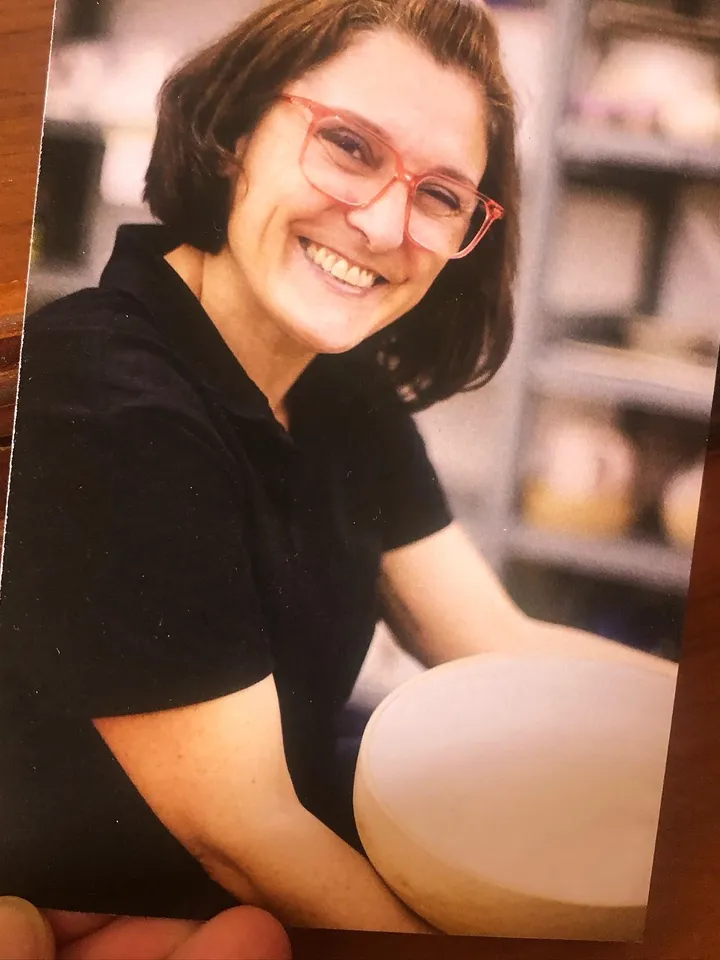
Eva Cerámica
Ceramicist & Teacher · Gràcia, Barcelona
Going back to making ceramics with children — the best decision I've made. I missed the creativity and spontaneity they have.
An artisan who throws pots, teaches classes, and sells at weekend markets has a full practice, but no single place where that practice lives for people who want to find it. ArtBeats gives makers a physical shelf in the Born quarter, a name on a card, a documented process. They keep their pricing. They don't compete with an algorithm for visibility.
When you buy from ArtBeats, you know the name of the person who made the object, where their studio is, and how they work. That information is not marketing copy; it is the condition for listing. Etsy has millions of objects; we have dozens of makers we have visited in person. Amazon Handmade does not require the seller to be the maker. We do. If you want something made in a small batch by a person whose name is on the label, this is where you find it.
The gallery is a converted ground-floor space in the Born quarter: high ceilings, pale plaster, the kind of light that comes through tall windows in the late morning. The objects are not behind glass. A ceramic bowl sits where you can lift it, feel the weight of the clay, run a thumb across the glaze. A glass piece catches the light differently each hour. The room is quiet enough to hear the difference between a well-thrown pot and a cast one when you tap it.
Carrer de Sant Pere Més Alt, 54
08003 Barcelona
Our standards
Before anything goes on a shelf, we visit the studio, see the process, and count the batch. These four criteria are what we check, not what we aspire to.
Every object is shaped, finished, and controlled by the person whose name is on it, not by a factory sub-contracted to fill an order. We ask makers how many pieces they can produce in a month. If the number is in the hundreds, they are not on this platform. The objects here are made at the speed a single pair of hands can manage.
The price on the label covers the time the maker spent and leaves room for a living. We do not negotiate margin down to make our prices look better. When we visit a studio, we ask how long a piece takes to make, and we expect the retail price to reflect that honestly. If a piece takes three hours and sells for eight euros, it does not belong here.
We ask where the clay comes from, where the glass was before it became a pendant, whether the dye is synthetic or plant-derived. «Sustainable» here is not a label; it is a conversation we have at the studio. Some makers use reclaimed bottles from Ibiza beaches. Others source clay regionally. What matters is that the maker can tell you the answer, and the answer holds up.
Small batch means the maker can describe every piece fired in last month’s kiln. It means two bowls from the same batch will not be identical; the clay remembers the wheel differently each time. For you, it means the object you hold has not been replicated at scale. There is no warehouse version of it waiting to ship the same day from a distribution centre.
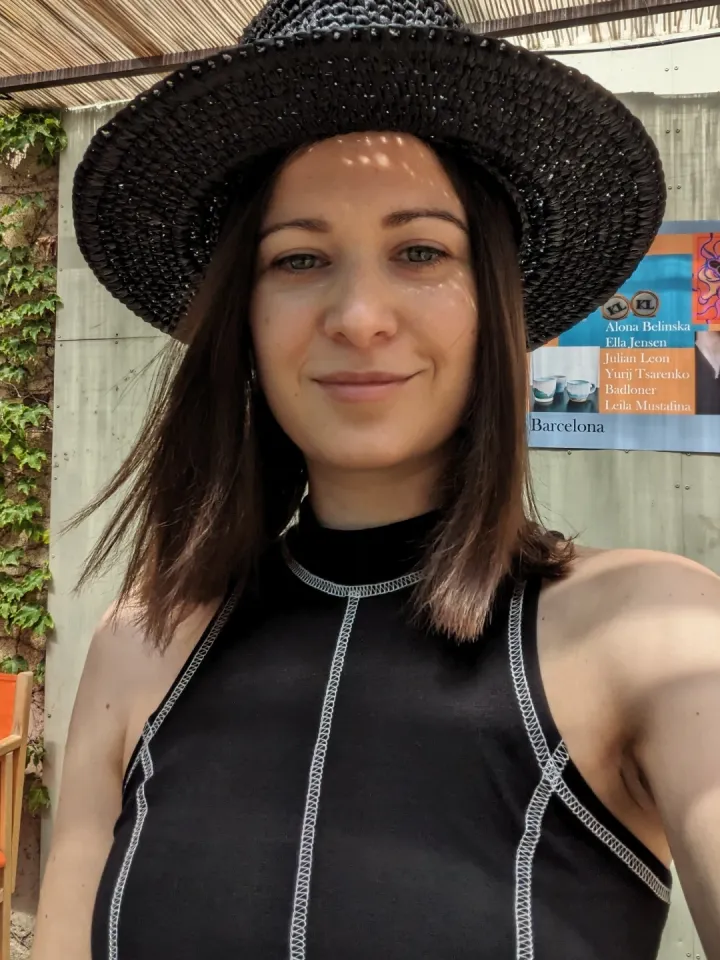
The curator
Alona works from Barcelona across two practices: ceramics on the wheel and oil painting on canvas. The ceramic work runs through daily-use objects, tea mugs, matcha bowls, candle holders, serving bowls, finished by hand and most often sold at street markets to people who met them in person. The painting practice moves slower; one canvas can take more than a year. She also teaches drawing at the Barcelona Academy of Art.
Working at the wheel changes what you notice when you pick up someone else's piece: the weight distribution, the way the rim was finished, whether the glaze pooled evenly or in a hurry. That is what informs the selection at ArtBeats: not aesthetic taste alone, but a maker's reading of another maker's process. What she will not list: work that cannot explain its own materials, objects produced at a volume the maker cannot personally account for, and anything that looks handmade without being so.
“The one thing I learned very young — is to value and cherish every minute of life and people around me.”
Every object begins with a person. These are the makers whose studios we visit, whose craft we trust, and whose work we are honoured to share.
Ceramicist & Teacher · Gràcia, Barcelona
Going back to making ceramics with children — the best decision I've made. I missed the creativity and spontaneity they have.

Glass Jeweller & Flameworker · Poble-sec, Barcelona
Come and visit my little glass world.
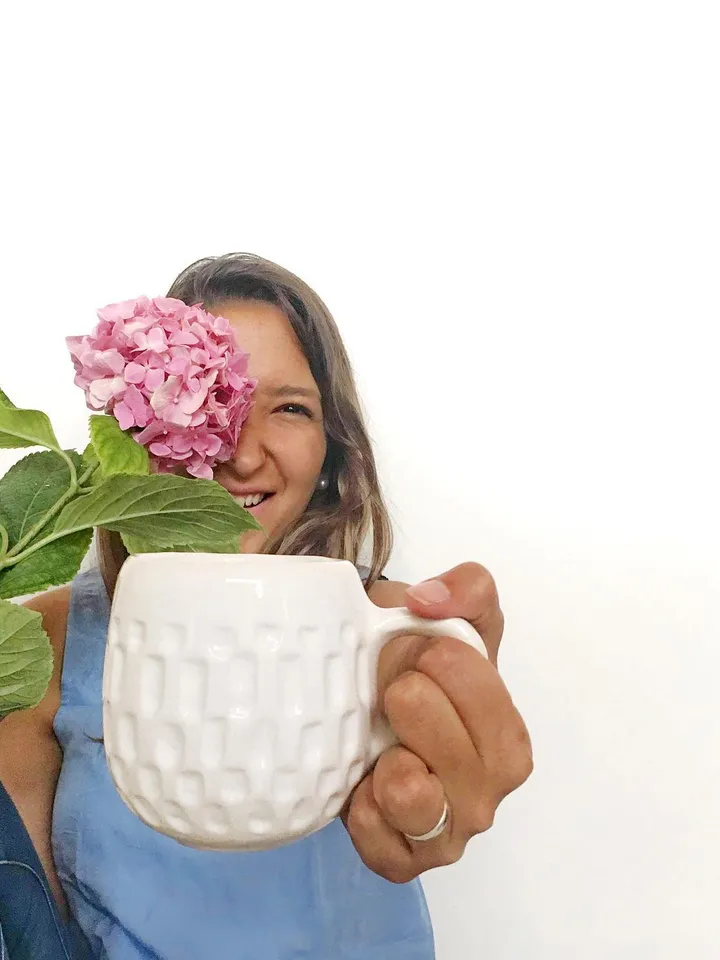
Recycled-Glass Jeweller · Barcelona, Ibiza and Bali
From discarded glass to a second-life beauty — that is the heart of upcycling Natt.
Every piece listed here has been selected in person. The maker's name, studio, and process are part of the listing, not footnotes. Start with what the materials tell you.
The gallery is at Carrer de Sant Pere Més Alt, 54 in the Born quarter, a short walk from the Palau de la Música. The objects are not behind glass. You can handle them, ask questions, and leave without buying anything.
Making something by hand in Barcelona? We visit studios before listing anyone.Get in touch if your practice fits what's on this page.